VintageHub: Where Retro Tech Meets Modern E-Commerce
There’s a certain magic in the click of a mechanical switch, the warm glow of a vacuum tube, or the satisfying heft of a well-machined dial. This tactile nostalgia isn’t just for collectors; it’s a powerful design language. For creators building digital products that sell heritage-inspired gadgets, artisan electronics, or curated lifestyle goods, capturing that analog soul in a clean, modern interface is the ultimate challenge. This is where a thoughtfully crafted UI kit becomes less of a tool and more of a co-pilot for your brand’s visual journey.
An Industrial Aesthetic for the Digital Shelf
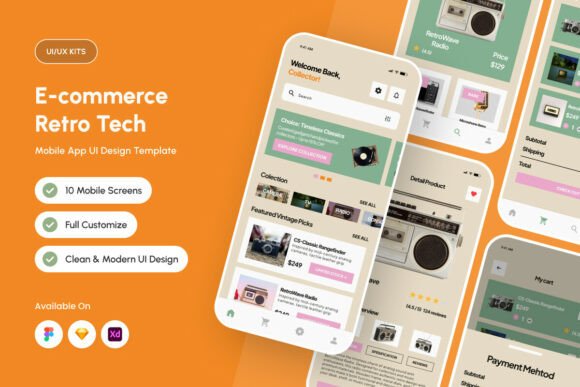
Imagine an e-commerce experience that feels less like a sterile grid and more like walking into a beautifully restored workshop. The VintageHub kit achieves this by marrying two seemingly opposite forces: the raw, honest materials of brutalist industrial design and the spacious clarity of ultra-modern minimalism. The color palette is a masterclass in controlled warmth. It grounds the interface in sophisticated neutrals—think aged concrete, brushed steel, and warm canvas—before injecting strategic bursts of high-contrast "Industrial Orange." This accent isn't just decorative; it's functional, guiding the user's eye to primary actions, key information, and calls-to-action with mechanical precision.
This visual approach solves a common problem for boutique brands. How do you present a product with history and character without making your website feel outdated? VintageHub’s answer is an editorial touch. Product layouts use generous white space and sharp typography to frame items like museum pieces, giving each gadget the reverence it deserves. The result is a professional atmosphere that builds immediate trust. Your users aren’t just browsing; they’re experiencing a curated collection, which naturally elevates perceived value and can significantly improve conversion rates for higher-ticket items.
Practical Applications Beyond the App
While its primary function is as a mobile UI kit, the design language of VintageHub is a versatile asset for a wide range of creative projects. The core components—the balanced layouts, the specific color harmony, and the blend of textures—can be extracted and reapplied to build a cohesive brand world.
For logo design, the kit’s typographic choices offer a fantastic starting point. The combination of technical thin-line icons with sharp retro-pixel fonts can inspire a wordmark or emblem that feels both technical and timeless. This aesthetic translates beautifully to packaging design for physical products. Think of a matte-finish box with a subtle embossed grid pattern, accented with that signature orange. It immediately communicates quality and a thoughtful, maker-centric philosophy.
Your social media graphics can adopt the same visual consistency. Create templates for Instagram posts or stories using the color swatches and layout principles. A product shot against a neutral background, framed by a minimal border and tagged with a pixelated font, creates instant brand recognition in a crowded feed. This consistency extends to web design beyond the shop, informing the look of a blog, an "About Us" page, or a landing page for a new collection. Even print materials like lookbooks, event posters, or thank-you cards can leverage this system, ensuring your brand feels unified whether a customer encounters it online or holds a piece of it in their hands.
Building a Cohesive Brand Identity System
A common pitfall for new businesses is a disjointed visual identity. The website feels one way, the Instagram another, and the packaging yet another. This fragmentation erodes trust and makes brand recall difficult. A comprehensive kit like VintageHub acts as a single source of truth, a foundational layer upon which you can build a reliable system.
The included global text and color styles are key here. By defining your headings, body copy, and accent colors within your design file (Figma, Sketch, or XD), you ensure that every new marketing asset, from a Facebook ad to an email newsletter, starts from the same visual baseline. This isn't just about looking good; it's about efficiency and professionalism. When your visual consistency is baked into your design tools, you spend less time guessing and more time creating. This systematic approach directly strengthens brand recognition. Customers begin to associate that specific shade of orange and that clean, industrial layout with your store, making you memorable in a competitive market.
Making the Kit Work for You
Adopting a new design system can feel daunting, but the key is to treat it as a flexible starting point, not a rigid cage. Here’s how to approach it practically:
- Customize with Purpose: The kit is fully customizable, so don’t hesitate to adjust the color palette to better match your specific brand. Perhaps your "Industrial Orange" needs to be a deeper rust or a brighter signal red. Test these changes across multiple screens to ensure they maintain the same level of contrast and hierarchy.
- Master Font Pairings: The kit uses open-source fonts, which is a huge advantage for commercial projects. Study the pairing of the retro-pixel display font with the clean sans-serif used for body text. This high-contrast pairing is a classic technique for creating visual interest and clear hierarchy. When applying this to other materials, you might introduce a third style, like a simple serif for long-form blog posts, but always keep the core duo as your anchors.
- Prioritize Readability: The "Analog Feel" must never compromise the "Digital Soul"—usability. Ensure that your customized text sizes, especially for body copy, remain legible on various screen sizes. The sharp, technical aesthetic should enhance clarity, not hinder it. Always test your designs on actual devices.
- Think in Components: The kit’s well-organized layers are your best friend. Instead of designing each screen from scratch, learn to reuse and recombine the pre-built components—product cards, navigation bars, button styles. This not only speeds up your workflow but guarantees that every new page you add feels like part of the same family.
Ultimately, the goal is to create an experience that feels intentional. Whether you’re a designer presenting to a client or an entrepreneur launching your own shop, having a robust, aesthetically authoritative foundation like this allows you to focus on what truly matters: your products and your story. It provides the professional presentation