Master Your Portfolio with a Modern Investment Analytics Dashboard
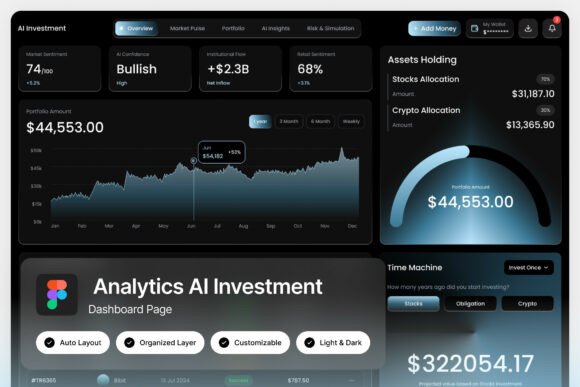
In the fast-paced world of finance, clarity is currency. For designers and financial professionals alike, the challenge isn't just presenting data—it's transforming complex numbers into a clear, actionable narrative. A well-executed investment analytics dashboard does exactly that, serving as the command center for savvy decision-making. This particular UI template, with its sophisticated dark interface and intelligent panels, offers a masterclass in how visual design can empower financial strategy. It’s more than just a set of charts; it's a thoughtfully crafted environment where every gauge, card, and insight panel works in concert to reduce cognitive load and highlight what truly matters.
The Power of a Purpose-Built Visual System
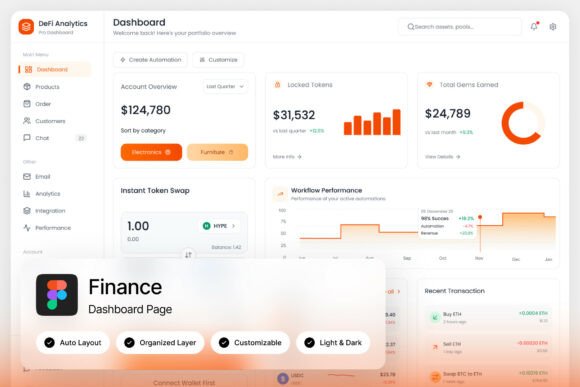
What sets this dashboard apart is its commitment to a cohesive visual language. The deep blue-black and teal palette isn't just aesthetically pleasing—it's functional. Dark interfaces reduce eye strain during long analysis sessions, and the strategic use of teal for accents creates a clear visual hierarchy, guiding the user's attention to profit tracking cards and key metrics without overwhelming them. The pixel-perfect layout ensures that every piece of data, from asset allocation charts to portfolio gauges, is presented with precision. For a fintech designer or a wealth management app developer, this isn't just a mockup; it's a foundational design system. The well-organized, named layers in the Figma file mean you can adapt it seamlessly, maintaining visual consistency across every touchpoint of your platform, from the main dashboard to detailed reporting modules.
Beyond the Screen: Translating Dashboard Aesthetics to Brand Identity
The principles embedded in this investment analytics dashboard—clarity, hierarchy, and sophisticated minimalism—are directly transferable to building a powerful brand identity. Imagine using the same deep, professional color palette and clean, modern typography for your company's logo design and website. The sans-serif font pairings ideal for on-screen data readability translate perfectly to clean, authoritative headings for a corporate blog or annual report. This visual consistency builds immediate recognition and trust. A wealth management firm could extend this aesthetic to packaging design for client welcome kits, using the dark, luxurious feel with teal foil accents. Social media graphics for market updates would gain instant credibility when they mirror the dashboard's data-rich, professional presentation. The design language here is inherently modern and trustworthy, making it a versatile asset for any financial or tech-oriented brand seeking to project competence and innovation.
Practical Applications for Designers and Entrepreneurs
For the creative professional, a template like this is a springboard. Its features address real-world project needs:
- Visual Consistency & Brand Recognition: Using the included Google Fonts and color scheme across your marketing assets—from email newsletters to digital product interfaces—creates a unified brand experience that clients will recognize and trust.
- Professional Presentation: Whether you're designing a pitch deck for a fintech startup or a report for an investment club, the dashboard's layout provides a blueprint for presenting complex information elegantly. The profit tracking cards, for instance, can inspire how you display key performance metrics in any document.
- Audience Engagement: Data visualization done right, as seen in the asset allocation charts, turns dry statistics into engaging stories. This approach can be adapted for infographics, investor presentations, or even educational content on social media, making your message more impactful and memorable.
The fully customizable nature of the file means you're not locked into one style. Need a light mode version for a client's daytime-focused app? The template includes it. Want to adjust the gauge visualizations to better match a specific financial product? The editable layers make it straightforward. This flexibility is crucial for designers who need to tailor assets to diverse client goals while maintaining a high standard of design quality.
Making Smart Choices for Your Projects
Selecting the right design asset is akin to choosing the right typeface for a project—it must align with the goal. This dashboard template excels for projects centered on data visualization, financial tracking, or any interface where information density must be balanced with user friendliness. When incorporating its style into your work, consider the core principles it embodies:
- Match Typography to Function: The included fonts are chosen for clarity on screens. Use the clean sans-serif styles for body text and data labels to ensure readability, and consider the display font options for impactful headings in your marketing materials.
- Test in Context: Before finalizing, mock up your designs on various devices. How do the teal accent colors appear on a mobile screen versus a large monitor? Does the text hierarchy hold up in a printed poster as well as it does on a webpage?
- Leverage the System: Don't just use the dashboard as a standalone screen. Deconstruct it. Use the card component styles for packaging inserts, the chart color schemes for data-driven blog graphics, and the overall layout grid for organizing information on a merchandise catalog page.
Remember, the true value of a premium design asset lies in how thoughtfully you integrate its elements into your unique creative vision. This investment analytics dashboard provides a robust, visually compelling framework that can elevate the professionalism of countless financial and tech-focused projects, from digital products to printed editorial layouts.